Thursday, April 25, 2019

Final Essay by Angela Grace

Throughout our Digital Humanities class, we have discussed many ways that new technology has helped us to connect with each other. I decided to focus my final paper on video games and how they positively affect mental health.
In my paper, I discuss how mental health has becoming widely known and accepted during the twentieth century and how video games can provide treatment options for those who suffer from depression and schizophrenia. Also, the ways that they can provide treatment for people who have had brain injuries, such as, a stroke.
 Image result for mental health and video games

Final post/essay- Jaimere Washington

In the digital humanities course we talked a alot about interactive fiction and mainly looked at alot of pieces within the genre. The idea of it being the future of literature was always something that I thought about. That it why I included various reason on why specifically interactive fiction is the future. Digital Humanities: Interactive fiction is Literature’s future

Final Essay - Brianna McKee

This semester in Digital Humanities has given me many ideas to think about going forward. This course was very interesting and opened my eyes to more forms of culture that I did not know existed. I am very excited to keep utilizing the things I've learned and relate them to my day-to-day life.

For my final essay, "Delicate Technology: The Combining of Human Consciousness and Artificial Intelligence," I chose to expand upon the idea of Artificial Intelligence and how it relates to human culture, consciousness, and the controversies they rise.

Final Blog Post~Daniel Marek

     This class was honestly very interesting. The topics studied really felt relevant to today's constantly changing world and I enjoyed being able to look closer into them. It was a nice break from learning about theories, laws, and math principles that were created hundreds of years ago.

     In contrast, my essay is about a law that became widely recognized 100 years ago, lol. Zipf's Law is a pattern popularized by a linguist named George Zipf. My essay dives into to a few explanations for why all languages follow this law. But unfortunately it only contains my viewpoints on why the law exists, because no one really agrees on the exact reason languages follows Zipf's Law.

Monday, April 15, 2019

Convergence

"Convergence" by Henry Jenkins seems to be the distinction between old media vs new media. Well that's the definition of a technical convergence, old and new media coexisting. As each generation is introduced to a new technology, whatever was made before simply becomes old media. With these two types of media in a way they are converged together, meaning they coexist. For example how we have hard cover books and electronic versions of those same books. Either way a convergence occurred once the new form a electronic books emerged. Or even within the article how it talked about the new use of cell phones and how they emerged through time as motion pictures began appearing on phones."Over the past several years, many of us have watched as cell phones have become increasingly central to release strategies of commercial motion pictures around the world..". As motion pictures were considered old media once may years passed from its introduction, cell phones appeared and included multiple functions. A technological convergence was occurring as movies were now being filmed with just a cell phone camera. Instead of the usual professional camera's, the phone was easy to carry and accessible to many. Phones were not being used to make phone calls, but to make ring tones, be used as a camera and other technological capabilities. People could send text without interacting with one another over a phone call. Making a simple phone call was a part of the old media and now the multi functionality cell phones was the new norm.

Image result for cell phone functions

The internet has had a huge impact on multiple old media's that many thought were in jeopardy. In the early 90's the internet was being birthed as it would include software's that you can search for information or receive information on current events. Many who were used to broadcasting or even using encyclopedia books would soon become something of the past. With computers continuing to advance, everything was going to be entering the digital world. There was a book that mentioned in the article called, "Being Digital" by Nicholas Negroponte, it mentioned how when everything is digitized old media's are in danger. "...predicting the collapse of broadcast networks in favor of an era of narrowcasting and niche media on demand...". In other words what would happen to broadcasting in the near future? Some believed the computer would adjust to the new media and others felt that it would destroy it. One of the digital revolutionaries back then named George Glider believed that the computer was not here to transform mass media but to destroy it (Jenkins, "Convergence"). He used examples like how the tv converged into multiple networks, the car taking over the horse, and a typewriter being converged into a word processor. All these examples seem to follow the old and new media concept. The internet would forever change most the industries that are known by the world.

Another topic that the article talked about was called "The Black Box Fallacy", which was basically stating how one device would have multiple functions on it and would be the only accessible thing to the public. Just like the cell phone, but literally it could do everything and this device would be owned by one company only. Of course it didn't work out because not every company wants to be owned by one big cooperation. At that point it would become a monopoly. Most likely companies like making money not only on one device but multiple devices that include different functions. For instance, take Sony and Microsoft. Sony has developed a console called ps4, which is the most recent console. It has multiple functions like internet access, apps and not only reading cam disk, but also downloading games digitally. It allows members to create a profile and become a member of play station plus, which gives the user internet access. Its controls are very different than its competing gaming console, xbox one. On the other hand although its has the same functions as the ps4, the xbox one has different controls and features. It has a different gaining store than ps4 does. Different controls as well. Each company has exclusive games that only members of each company can play. Yes they are both gaming consoles, but they seperate themselves through different endorsements. Each can be connected to a certain app which include benefits. In the end it's all a business. The way things are looking there were talks a cross platforming but that has yet to come.

Image result for playstation vs xbox

As technology advances, many things that we considered new media will soon become old or simply another addition to new media's that will erupt. Convergence shouldn't be seen as something detrimental, but a way to keep improving and rebuilding. Although huge companies like amazon are taking over multiple industries, toys and hard cover books are still being used. Maybe in a way this can motivate barnes and nobles to try to convergence in the digital era. It does seem like if certain companies don't converge soon though they may be left behind. Convergence shouldn't be forced upon other companies but suggested. Every company should have time to adjust and it should decide  whether or not they want to. Everything is becoming digitized and in the near future as another convergence will occur, new technologies should be available not only to those who can afford but accessible for all of the public.

Wednesday, April 10, 2019

Archives

In class this week we learned the difference between archives and collections. Our discussion led to the conclusion that archives are a collection or accumulation of data that is stored in hopes to preserve materials. All archives are collections, but not all collections are archives. A collection is a broad, not subject specific, aggregation of materials.

The Rossetti Archive is one specific archive we viewed in class. It is a collection of data from the life of Dante Gabriel Rossetti. Rossetti was a painter, designer, writer and translator. One cool thing about this archive is that there is a tab that you can choose that will take you to some of his works, including: poems, pictures and manuscripts.


Our tribe came up with the idea to make an archive of the abandoned ski lifts in the United States. We arrived with this idea from having an abandoned ski lift on campus. This archive would include old photographs and pamphlets that are connected with different ski lifts. It could also mention information about them and how they became abandoned.


Monday, April 8, 2019

Twine Project ~ Daniel Marek

I created a twine piece called Not the Places You'll Go but the Ways You'll Get There. The Piece connects cars and people by directing you to your dream car.

Daniel Marek

Image result for super car

'Untama' by Brianna McKee

Using Google's MyMaps, I created an essay called 'Untama.' It is a story of a plague told through news headlines and a young girl's diary. The entire story was generated by playing the game Plague Inc.
-Brianna McKee

"Aliens" project by Angie Grace

I used google maps to create a fictional story about Aliens. In my story, I visit various places around the US where i attempt to learn more about them.

"Supernatural Episode 1" by Jaimere Washington

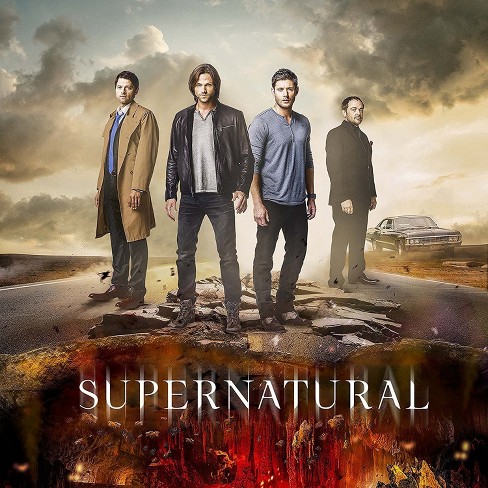
Image result for supernatural

Here is a link to my e-lit project that is based on the hit show supernatural. It only touches the first episode but it digs deep into a world where everything that lurks in the shadows exist. Every myth and monster is out there. Two brothers, Sam and Dean are the only thing that will come between evil devouring the world.  Project (Supernatural Episode 1)

Friday, April 5, 2019

Distant Reading of our Posts

Data mining, which is a form of distant reading, is how we are able to do more research with large pieces of text. To practice this, we plugged all of our blog posts into Voyant and Google Ngram. We started by looking at our most used words: 'share', 'literature', 'games', and 'player' as seen in the picture below.

'Share', being our most used word, was actually invalid because there are share options for each post. So, we are focusing on 'literature', 'games', and 'player'. The following picture shows how often and when the words were used over the course of all posts. As shown, 'player' and 'game' peaked when we were on the topic of video games while literature has been fairly stable across all posts.

Finally, when plugging these three words into Ngram, we can see that 'literature' was the most used word with the lines never crossing. This was surprising to me, seeing how video games and games in general are peaking in this time period, but it seems that literature is still more common and maybe even more important. 


Sunday, March 31, 2019

Artificial Intelligence

     The technological singularity sounds great at first. What could be so bad about a run-away super intelligence? The problem is that a doomsday scenario of a robots taking over the world coincides with the idea of technological singularity being accidentally created and set free to self improve.  I believe that the technological singularity hypothesis only considers a form of technology that is created with no fail-safes. A super intelligence that is created with no barricades could be very dangerous. If its only purpose is to self improve then humans will eventually no longer be needed and might even get in the way of self-improvement. In my opinion, a form of intelligence created by humans will be created with the intent of helping humans thrive. I think a technological singularity that improves the lives of humans will be created before one that only has itself in interest. It is much more difficult to create something that will be able to self improve and be a sentient being, than something that can self improve with pre-existing human friendly motives.
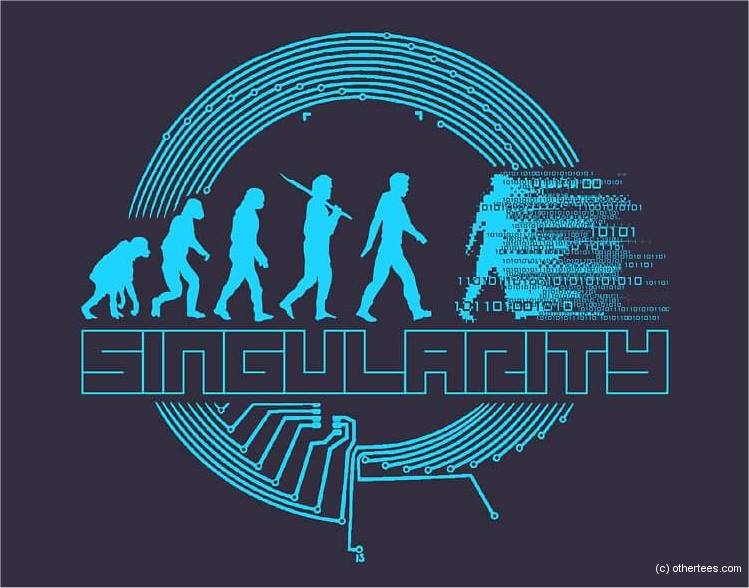
Image result for technological singularity
     This is where I start to think about how Stelarc's work is a more accurate representation of our future. Humans are going to be the original creators of this technology so it should have humans in its best interest at least in the beginning. His work shows how humans can interact with even the technology of today's world. 
Image result for cyborg
     Ray's Kurzweil makes some pretty interesting predictions about the future of technological advancements. Many of these predictions are related to biological technology advancements.  Many of his predictions would seem reasonable if the time scale was in the hundreds of years, but he believes these advancements will be made in the next 25 years! Kurweil makes his predictions for the near future because of his considerations of Moore's Law. Technology increases at an exponential rate which means advancements happen sooner than expected many times. One of my favorite examples of this is the short time it took for humans to go from the Wright brother's first flight to NASA's moon landing. Only 66 years between the first time we left the ground to the first step on another celestial body!
Image result for moon landing
     If humans continue to follow Moore's Law, it will not be long before we are uploading our brains to become immortal. The problem that we face today is that our brains are constantly changing and making new connections which makes it difficult to just make a copy of our brain to function properly. I believe that we would still be the same person if we did find a way to be uploaded into a new form or body. Our bodys are constantly changing anyways. A one year old looks nothing like him/her-self after he/she grows up, but we still consider them to be the same human their whole life. How is this so different than just changing your body form immediately?

Monday, March 25, 2019

Do games count tho?

As we are learning and dissecting exactly what digital humanities are, this week we looked at a few pieces that are a part of a genre of literature called interactive fiction. This genre is another part of literature where a gaming element is added to enhance the way stories are being told. It still has a interactive element, but these games can be constructed to have a plot or it can be more of an observant experience for the reader. For example some games within digital literature can come in text form. Basically, the player will be emerged in a world that is only imagined through words.

Within the first week of learning about games within literature, Zork was one of the first genre of games we looked at. It's a text base game that was referenced in the first paragraph. Zork was created by the first gaming companies called, Infocom. Infocom became a huge hit within the early 80's. It was seen as something revolutionary because a plot was added and in a way, the reader can now become the player. With every game came these objects called "feelies", which were certain materials that came along with the game. This helped really helped the player feel like they were in the game. Referencing back to Zork, The player is emerged into a text based world and every action is a command that the player will type in. Below is a walkthrough of the game Zork. As shown in the video everything that is done in the game depends on the actions typed in. This definitely displays a similarity to the digital narratives we have been looking at. Interactivity is what these two genres have in common. Another example of gaming would be games that actually have graphics and images. 

ZORK WALKTHROUGH VIDEO

One of the games we looked at that included sound and images was called "That Dragon, Cancer". The addition of graphics and sound makes the plot of the game more effective. Once again its a digital narrative but on a different format. Video games can make understanding the story easier because you are shown these different images and various symbols of a video game can easily be pointed out. for instance, in he video game, "That Dragon, Cancer", the player is viewing a child who seems to have cancer and each part of the game is the child interacted with different people. As the player gets closer and closer to the end, it helps us understand that we are getting closer and closer to maybe the death of the child. That's why video are powerful because everything is being shown to the player. You are set right there in the game either clicking away being an observer or controlling the main character of a story.

We have also looked at games that serve as messages which reflects the world of today. One of the games was called "Prison strike". This was a electronic literature game that made the player be seen as a literal eye. You were the eye that saw all the bad things that is going on within the prison system. Various use of symbolism is also used in this type of gaming. The plot is somewhat not as immerse as video games, but these type of games focuses more on the message instead of plot story. There isn't the usual protagonist v antagonist, its just the player being exposed to a certain truth that is being shown to them as they walk through the game.


This is why within the digital format of storytelling, games count as being part of the digital narratives. A story is still being told and each time the player experiences something different. They can journey through a world of imagination in Zork, or drop a couple tears for the boy in "That Dragon, Cancer". Either way the reader is being effected in some way. No matter the format a story or a message is being told. This can also be the future of literature in many years to come, or honestly it might already be the future of literature.

Wednesday, February 27, 2019

Uncreative Writing


Two weeks ago as a class we were introduced to an idea of transcribing various video clips that were chosen by each tribe member in the class. This was inspired by Kenneth Goldsmith, who made various methods to show the concept of authorship. Most of the pieces we looked at were self generated poems which included a variety of works put in a code and then controlled by AI to construct it as their own poem. Which then brings up the question, is literature becoming digitally modern as we move on through time? We are further reflecting on a future where the definition of a Arthur might be changed. Referring back to the article from Goldsmith, the art of transcribing was shown as he made his students watch project runway and then turn what was typed into a poem. This was shown to

Then came time for our tribe to transcribe various videos that were chosen by our tribe and other tribes in the class. In order to record each line of transcription, all tribe members were invited in a google chat. Here is a screenshot of what we were doing when the videos were playing. As you can see each tribe member were typing whatever they were hearing. No matter the typos or repetitiveness, it's all a part of the art form. As most can see, a lot of funny things were recorded and each tribe member enjoyed this activity.

The ending result was the product of what was transcribed. We put it in a google doc and editing various lines to construct a poem. Overall, actually working as if we were text generators, gave us a new point of view. Although it seems impossible, a poem can be made from a AI text generator but for now it can be highly difficult to make it look believable.

Sunday, February 17, 2019

Generative Text


In Digital Humanities, we have been looking at works of generative text and bots. The pieces bring up many controversial questions that humans as a whole have difficulty answering. Before we look into these questions, here are some examples of text generators that we have looked at in class.
Sea and Spar Between by Nick Montfort and Stephanie Strickland is a poetry generator that includes digitized words and phrases from poetic works of Emily Dickinson and Herman Melville's Moby Dick. To explore the piece, you may type in two numbers, representing nautical coordinates, or move your mouse to explore the vast collection of generated poetry. This work brings up many questions about authorship and meaning.


Another piece of generative text is Evolution by Håkan Jonson which takes the artwork of Johannes Heldén and mimics his music and literature. The algorithm uses similar words, spacing, and dreary music as the musician/writer had created. The ultimate goal of Evolution is to pass the Turing Test, a test that looks for artificial intelligence.


In my personal opinion, Sea and Spar Between’s code has very specific phrases that are to be ran in the work. These phrases are directly taken from Emily Dickinson and Herman Melville so their credit should not be taken away. Though the programmers created the visuals and decided where to put the phrasing, Dickinson and Melville are still the authors. Evolution, on the other hand, is a little more complicated. The algorithm requires more knowledge of coding to understand. Instead of simply randomizing phrases by Johannes Heldén, it is mimicking his work to create something very different and even unique! The algorithm is essentially creating it’s own work! Does this mean the coder is the author? It is very hard to come to a conclusion and everyone has their own thoughts on this question.

Friday, February 8, 2019

Image Corruptions

Today in class we learned how to corrupt images. These are a few that I thought were neat.


Image Corruptions

Today in Digital Humanities, we learned to corrupt images. Its super fun! Here is a before and after of an image of Dan, our very own tribe member :)


Saturday, February 2, 2019

Observing Multiple Elements Of E-lit through Various Works

Electronic Literature gives readers a way to interact with our literature. Before the time of computers, writings could not include animation, sound, or any sort of interaction. This changes the way a reader experiences pieces of literature and is very significant to the advancement of creative communication.
The following are examples of various pieces of Electronic Literature. 


One example of Electronic Literature is e-poetry. “The Sweet Old Etcetera” by Alison Clifford and “Puddle” by Neil Hennessy are two great pieces of e-poetry. “The Sweet Old Etcetera” was full of poems by e. e. Cummins. By moving through the piece, more and more of a beautiful landscape are revealed as well as phrases by the poet. This was an example of how we can advance on static poems. A more simple approach was “Puddle,” which creates an animation with solely words. Both “The Sweet Old Etcetera” and “Puddle” show how original poetry can be built on to create beautiful animations. These works made me see more of what poetry can be.

In one of the weeks of readings, pry’s unique take on loss and secrets was something intriguing. Just the trailer kind’ve tells you how impactful of a story this is. It has all the interactive elements like touching the screen and swiping up and down. Pinch the screen to make text in the passage large or viewing multiple clips through the piece. Although the access to it was limited, I was able to access a link to the description and view a demo of the work (http://tenderclaws.info/sheet.php?p=pry). As it seems in the work, the reader will get the protagonists point of view. For example, the main character is a war vet who lost his sight or close to losing his sight. The piece shows this as every image or every video will be from the main character's point of view.


A very interesting depiction of electronic literature is “Tailspin”. The piece tries to give you an insight on what it is like to live with tinnitus. The piece uses sounds to show the perspective of a war veteran that used to work on aircraft.  It tells the story from the point of view of a mother that has to deal with the issues of a father that refuses treatment and rowdy kids at the same time. It was interesting to me because it showed the struggle of living with tinnitus and being a caregiver to someone that has it.


This week we took a look at Pieces of Herself. I found this that this interactive piece was oddly satisfying. I liked the idea that you could choose things (pieces), that create a type of self image. It gives you private and public environments to explore and collect pieces. I felt that exploring this interactive piece, somewhat empowered me.


Sunday, January 13, 2019

About Me: Angie


Hi, my name is Angela Grace, but I like to be called Angie. I am a senior Biology major here at UPJ. Most days, I enjoy going to the gym and playing with my cat, Ozzy . Listening to music and hanging out with my friends are some of my favorite things to do.


To my understanding, digital humanities is the study of how technology has developed to help us interact with all types of literature, poetry, and many other different types of humanities. Computers, smart phones, and other technological devices allow us to get a better understanding of pieces. Throughout the semester, I will gain more knowledge about digital humanities.


Saturday, January 12, 2019

About me: Jaimere Washington

Wassup, my name is Jaimere Washington, I'm currently a sophomore who's double majoring in Creative Writing/MMDC at the University of Pittsburgh-Johnstown. I love watching Netflix, a lot actually. Honestly chilling with my girlfriend is something I like to do as well. Then, playing video games and writing are also other things I like to do. Just another thing, sometimes I may go on random tangents or just think too deeply of things.

Image result for electronic literature
Recently I have been enrolled in the course called digital humanities. In my own interpretation, digital humanities can be seen as revolution or another platform to expand how we use human expression. Although a program or software will hold a specific piece of work, humans are still the ones to create and give the program or technical machine a task. I believe it's the future of the humanities division because we are vastly entering a technical world and the world wouldn't work if there were authors or writers as robots. If that were the case that would take out the real human emotion and expression.

Final Essay by Angela Grace

Throughout our Digital Humanities class, we have discussed many ways that new technology has helped us to connect with each other. I decided...